Natural History Museum of China
Introduction
The Natural History Museum of China, located in Beijing, is a premier institution dedicated to the study and presentation of natural history. As the only national, comprehensive natural history museum in China, it is renowned for its extensive specimen collection, scientific research, and educational outreach.
Originally inaugurated in May 1958, the museum's main building was inscribed by Guo Moruo, then president of the Chinese Academy of Sciences. It was first opened to the public in January 1959 as the Beijing Natural History Museum. Over the decades, the museum has grown significantly in its collections and research capabilities, establishing itself as a cornerstone of China's natural history study.
In January 2023, the institution underwent a significant transformation, rebranding itself as the national Natural History Museum. This change was part of a broader effort to enhance its role on the national and international stage. The official opening ceremony under its new name was held on June 5, 2023, marking a new era in its development. Through its history, the museum has been a leader in specimen collection, research, and education, achieving numerous accolades, including awards from prestigious organizations.
Exhibitions
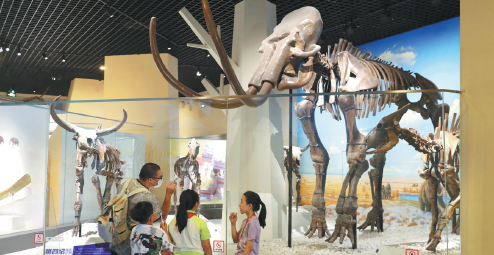
The Natural History Museum of China offers a diverse array of exhibitions that cater to varied interests. Permanent displays are found in the Halls of Paleontology, Zoology, Botany, and Mankind Evolution. These exhibitions provide visitors with a comprehensive understanding of the natural world's history and development. The Hall of Paleontology features fossils from different geological eras, offering a glimpse into prehistoric life. Notable exhibits include a 140 million-year-old Mamenxi dinosaur fossil and other significant dinosaur specimens.
The Hall of Zoology and the Hall of Botany showcase the diversity of animal and plant life, illustrating the process of biological evolution. The Hall of the Origins of Mankind explores human evolution, tracing the lineage of modern humans from earlier life forms. The museum also hosts temporary exhibitions that highlight specific themes or discoveries, ensuring that there is always something new for visitors to explore.
Collections
The Natural History Museum of China boasts an impressive collection of over 430,000 specimens, making it one of the most significant repositories of natural history artifacts in the country. Its collection spans various fields, including paleontology, zoology, botany, and anthropology. The museum is particularly noted for its rare specimens, which are unmatched among domestic nature museums.
Highlights include fossil remains from the Paleozoic, Mesozoic, and Cenozoic eras, as well as an extensive array of invertebrates, mammals, early humans, reptiles, and dinosaur skeletons and eggs. The museum also houses a large collection of minerals and naturally carved stones used in traditional Chinese art. These collections serve as vital resources for research and education, contributing to the museum's role as a leader in natural history study.
Visitor Information
Address: 126 South Tianqiao Street, Dongcheng district, Beijing Websites: www.nnhm.org.cn/en/(En) www.nnhm.org.cn/(Cn) Hours: 9:00-17:00 (last entry at 16:30) Closed on Mondays (except national holidays) E-mail: nnhmoffice@nnhm.org.cn General admission fee: Free (passport required for entry)








